You don't need to leave Baku's vicinity for more than an hour to find yourself facing scenes that have nothing to do with the city's modern skyline: rock carvings thousands of years old, mud volcanoes, and a mountain that has been burning uninterrupted for decades. These two destinations - Gobustan to the south, and the Absheron Peninsula to the city's northeast - each deserve a separate full day, and both are easy to reach by private taxi, an organized tour, or a rental car.
Gobustan: an open-air museum under the sky
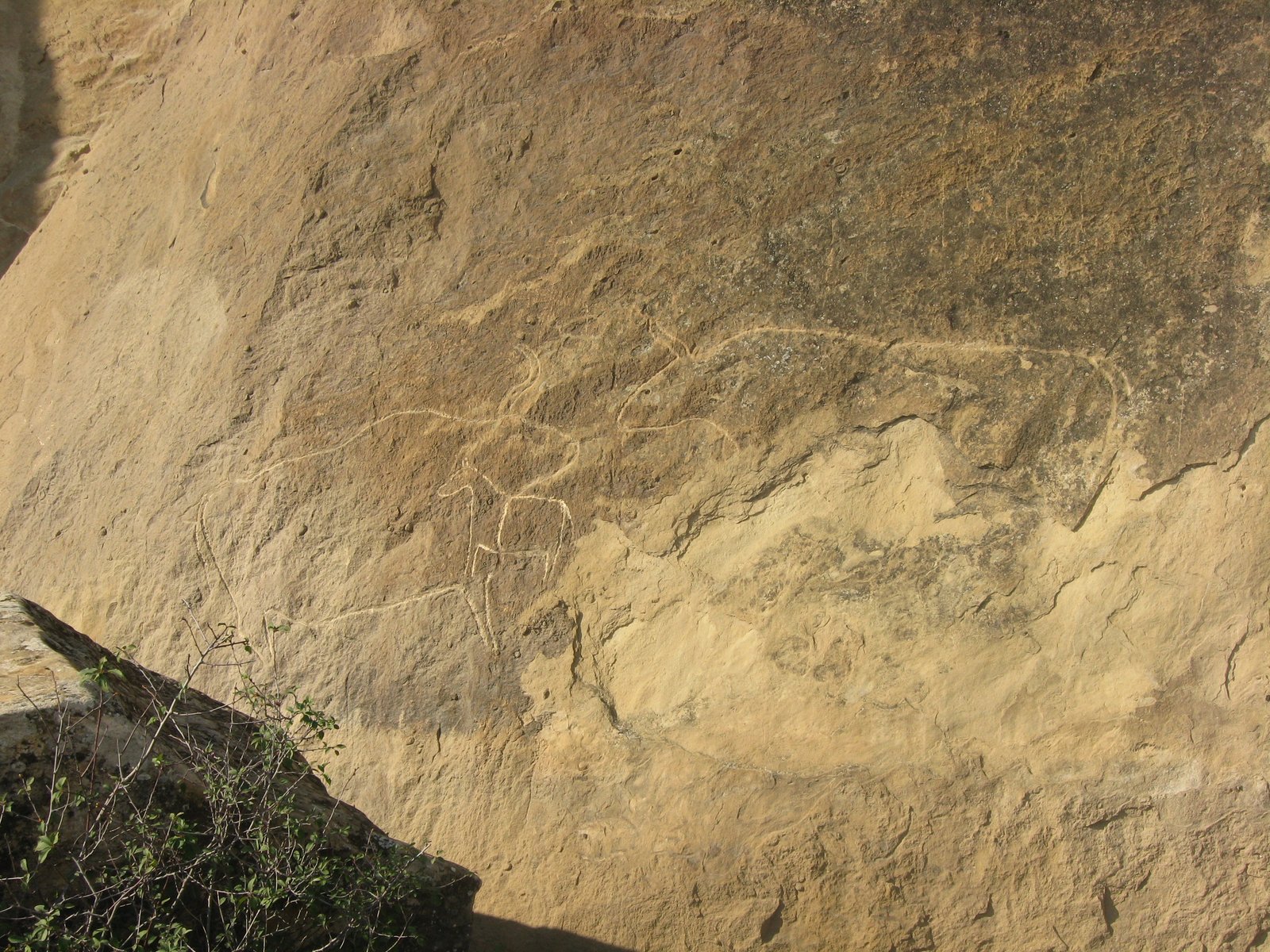
Gobustan National Reserve sits roughly 60 to 67 kilometers south of Baku, about an hour's drive along the Caspian coast. The site is inscribed on the UNESCO World Heritage List as the "Gobustan Rock Art Cultural Landscape," and holds more than 6,000 petroglyphs, some over 5,000 years old, depicting animals, human figures, and ritual scenes carved directly into the rock. Start at the modern museum at the site entrance, which offers good context before you head onto the walking trail among the carved rocks. Set aside one to two hours for the actual walk among the engravings. About 7 kilometers further south toward the road to Alat, Gobustan's mud volcanoes spread out - a natural phenomenon worth the stop: Azerbaijan holds more than half of the world's mud volcanoes, forming small mounds that slowly bubble from gases trapped underground. Add to that the "musical stone" (Gaval Dash), which rings with a metallic sound when struck, a local curiosity noted by the site's guides.
The Absheron Peninsula: the Land of Fire
On the opposite side of the city, the Absheron Peninsula rightly carries the nickname "Land of Fire," thanks to two sites unlike anywhere else in the region:
- Yanar Dag (Burning Mountain), in the village of Mammadli about 27 kilometers from Baku, where a continuous natural flame rises from gas seeping through a limestone ridge, reaching up to three meters high across roughly ten meters of hillside. The flame burns day and night without pause, and is a striking sight best viewed at dusk when it becomes more vivid.
- Ateshgah Fire Temple, in the village of Surakhani about 30 kilometers from central Baku, a 17th-century complex built over natural gas vents that once fed an eternal flame, historically used as a pilgrimage site by Zoroastrian, Hindu, and Sikh fire worshippers. The temple has been on UNESCO's Tentative List since 1998.
How to plan your days
Gobustan lies south of Baku, while Yanar Dag and Ateshgah sit to the northeast toward Absheron - meaning the two destinations lie in roughly opposite directions, making it impractical to comfortably combine them into one day. It's best to dedicate a separate half-day to each, or a full day per trip if you want to take your time without rushing.
Practical tips
- Book a taxi (via the Bolt app, for instance) or an organized tour in advance, as the sites aren't served by direct public transport from the city center.
- Carry water and a hat in summer, as the sites are largely exposed with little shade.
- Comfortable flat shoes are essential at Gobustan due to the uneven rocky ground.
- Spring and autumn (April-May, September-October) are the best times for both trips, avoiding summer's harsh midday heat.
Both trips reveal a side of Azerbaijan entirely different from what you see on Baku's modern streets - a much older face, where the land itself speaks, whether through a silent rock carving thousands of years old or a flame that hasn't rested for as long as anyone can remember.