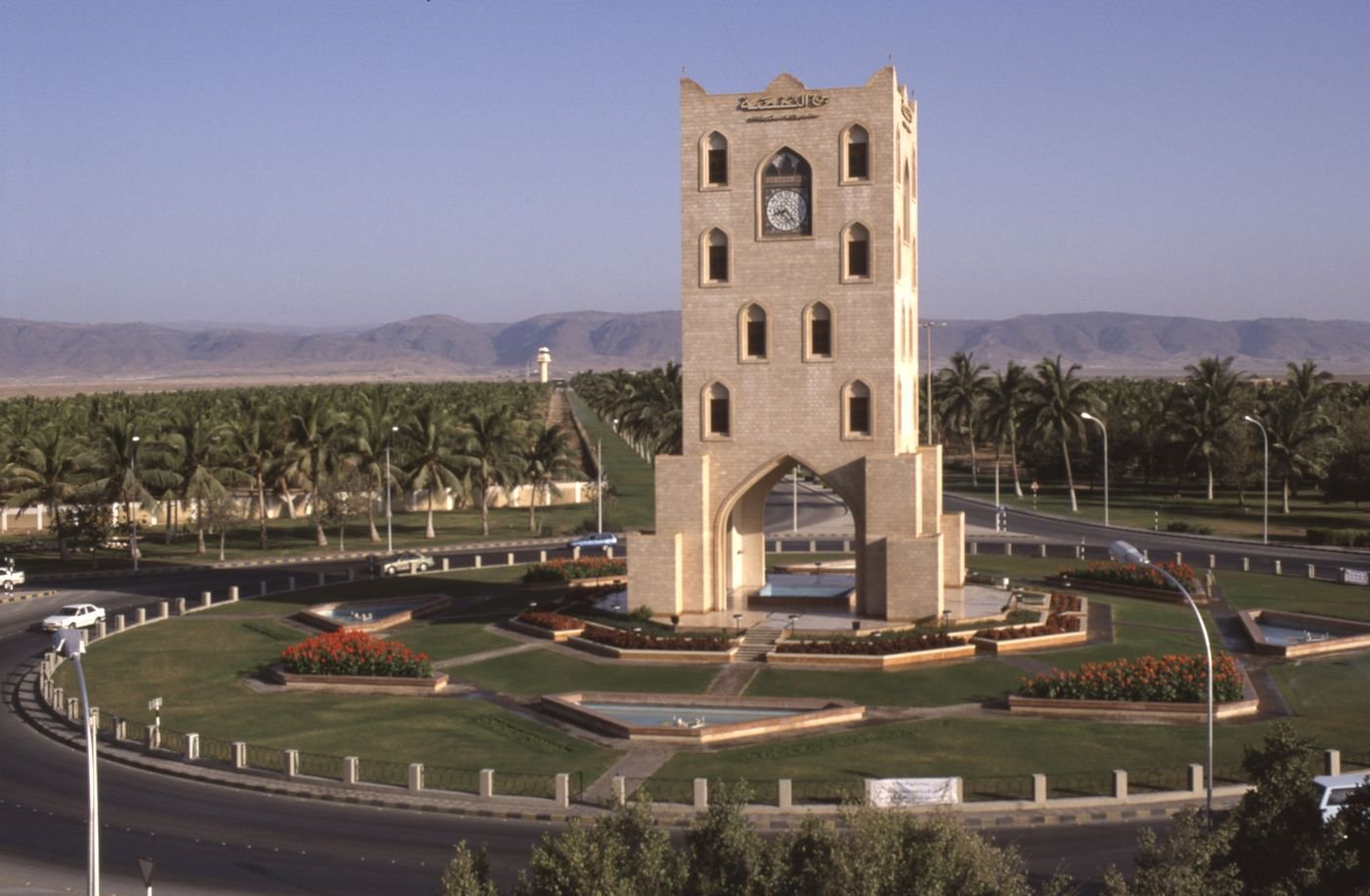
Salalah, capital of Oman's Dhofar Governorate, is unlike the rest of the country: a semi-tropical microclimate that turns its mountains green in summer while the rest of the Gulf bakes. Before you plan the trip, a few practical questions need answers.
Entry: no visa, ID card only
Saudi nationals, like all GCC citizens, do not need a visa to enter Oman. A national ID card is enough at any port of entry — Salalah International Airport, or any land or sea border — with no advance registration or passport required. This privilege extends to GCC family members, though children should carry a valid ID or an approved proof-of-relation document when traveling with only one parent. Non-GCC residents of Saudi Arabia need a separate Omani visa, usually obtained online in advance through the Royal Oman Police or Foreign Ministry e-visa portal.
When to go
The Khareef (monsoon) season officially runs from 21 June to 21 September, with peak greenery, mist, and light rain from mid-July through the end of August. This is the season Salalah is famous for across the Gulf — it hosts the Salalah Tourism Festival, and airlines run seasonal direct flights from Riyadh (flynas and Saudia) specifically to meet this summer demand. Outside Khareef, from October to April, the weather is warm, dry, and sunny — ideal for beaches and mountain drives without the crowds, and noticeably cheaper.
Currency and cost
Oman's currency is the Omani Rial (OMR), one of the highest-valued currencies in the world, pegged to the US dollar since 1986 at a fixed rate of 1 OMR ≈ 2.6008 USD. Prices that look small in rial figures are actually relatively high once converted — a mid-range meal runs 3-5 OMR, and a decent three-star hotel room starts around 25-35 OMR a night. Carry some cash from the airport exchange, since cards aren't accepted everywhere, especially in local souqs and taxis.
Getting around and staying connected
Salalah's road network is good, but a rental car picked up at the airport is by far the best way to explore — most highlights (Wadi Darbat, Ain Razat, Mughsail) sit 20-45 minutes outside the city, and public transport is limited. A local SIM (Omantel or Ooredoo) is easy to buy at the airport with your ID, and coverage is solid across the main tourist areas.
One last tip: book your hotel and car weeks ahead of Khareef season — Gulf demand spikes hard in July and August, and prices can more than double.