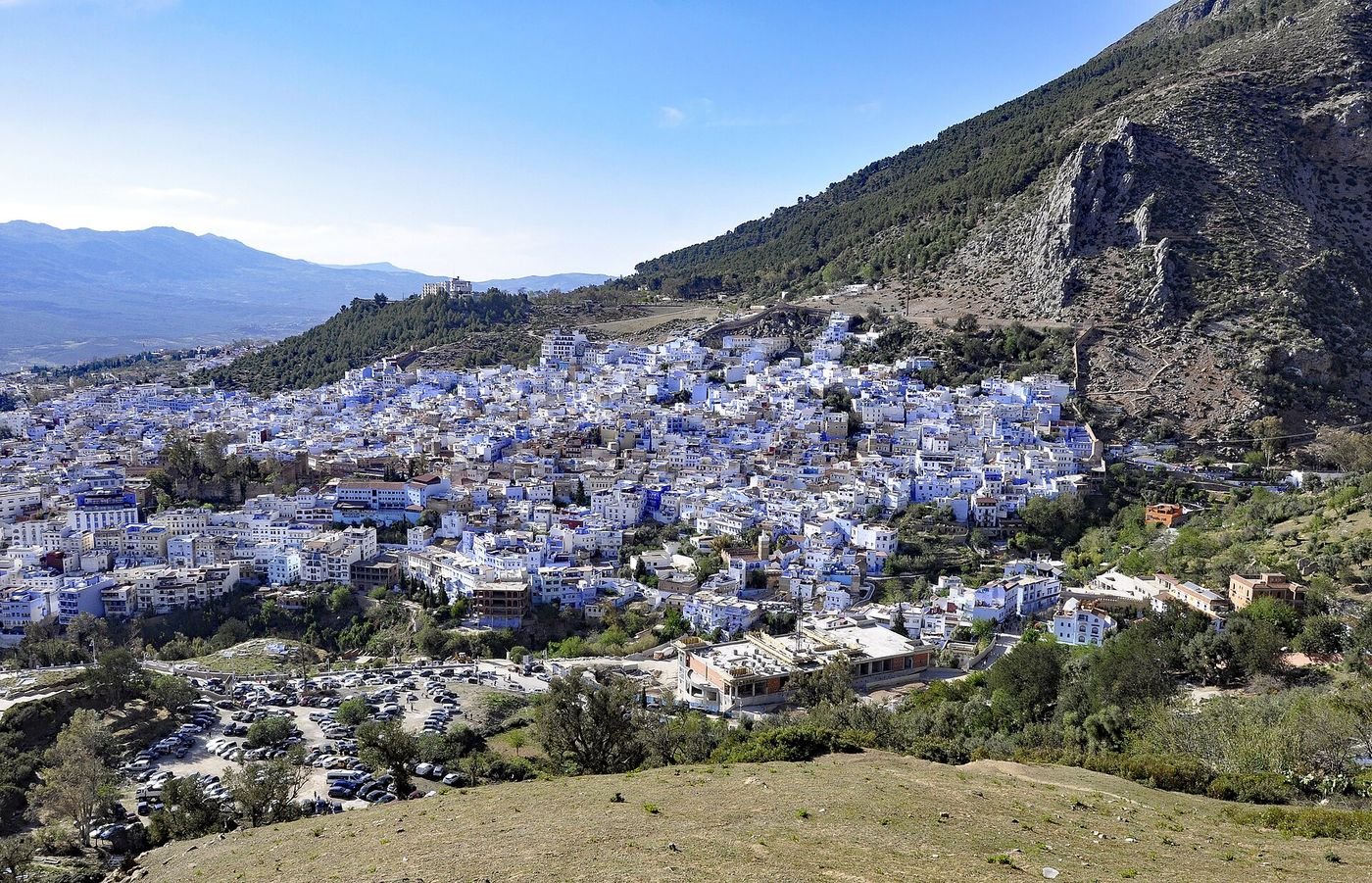
Chefchaouen is one of the most photographed towns in the world, which is exactly why planning matters if you want distinctive shots instead of the same recycled images everyone's seen online. Rule one is timing: go very early, between 6 and 8 a.m., when the light is soft and golden and the lanes are nearly empty of visitors and vehicles. By mid-morning through evening, day-trip buses arrive from Tangier and Fez, and the famous alleys fill up, making a clean shot much harder to get.
The best areas for the classic shots are the lanes branching off Avenue Hassan II and climbing uphill, where graduated blue stairways, colorful doors, and potted plants line the walls. Don't limit yourself to the well-known main streets — the best images are often in lesser-known side alleys where the color contrast is richer and there's less visual clutter from signage and souvenir shops. For a panoramic view of the whole town, head to the Spanish Mosque viewpoint on the eastern hill — the best spot for sunset shots, when the rooftops turn into a sea of blue under a pink sky.
Ethically and practically, remember that Chefchaouen is home to real people, not an open-air photo set. Always ask permission before photographing locals up close, especially women and the elderly, and be prepared to offer a few dirhams if asked, which is a common local custom. Avoid lingering too long in front of people's doorways just to get a shot — residents live their daily lives amid this beauty; they're not decoration. Drone use requires prior official permission from Moroccan authorities, which most visitors never obtain, so it's best to stick to ground-level photography.
Technically, a wide-angle lens is extremely useful in the narrow alleys, but don't neglect a standard or short telephoto lens for capturing door and window details from a respectful distance. A tripod can be cumbersome and impractical in the tight, sometimes crowded lanes — save it for the quietest early-morning hours. Finally, Chefchaouen's blue is periodically repainted by residents, traditionally refreshed ahead of certain religious occasions, so the exact shades can vary slightly from one visit to the next — part of what makes the town feel alive rather than a static backdrop.