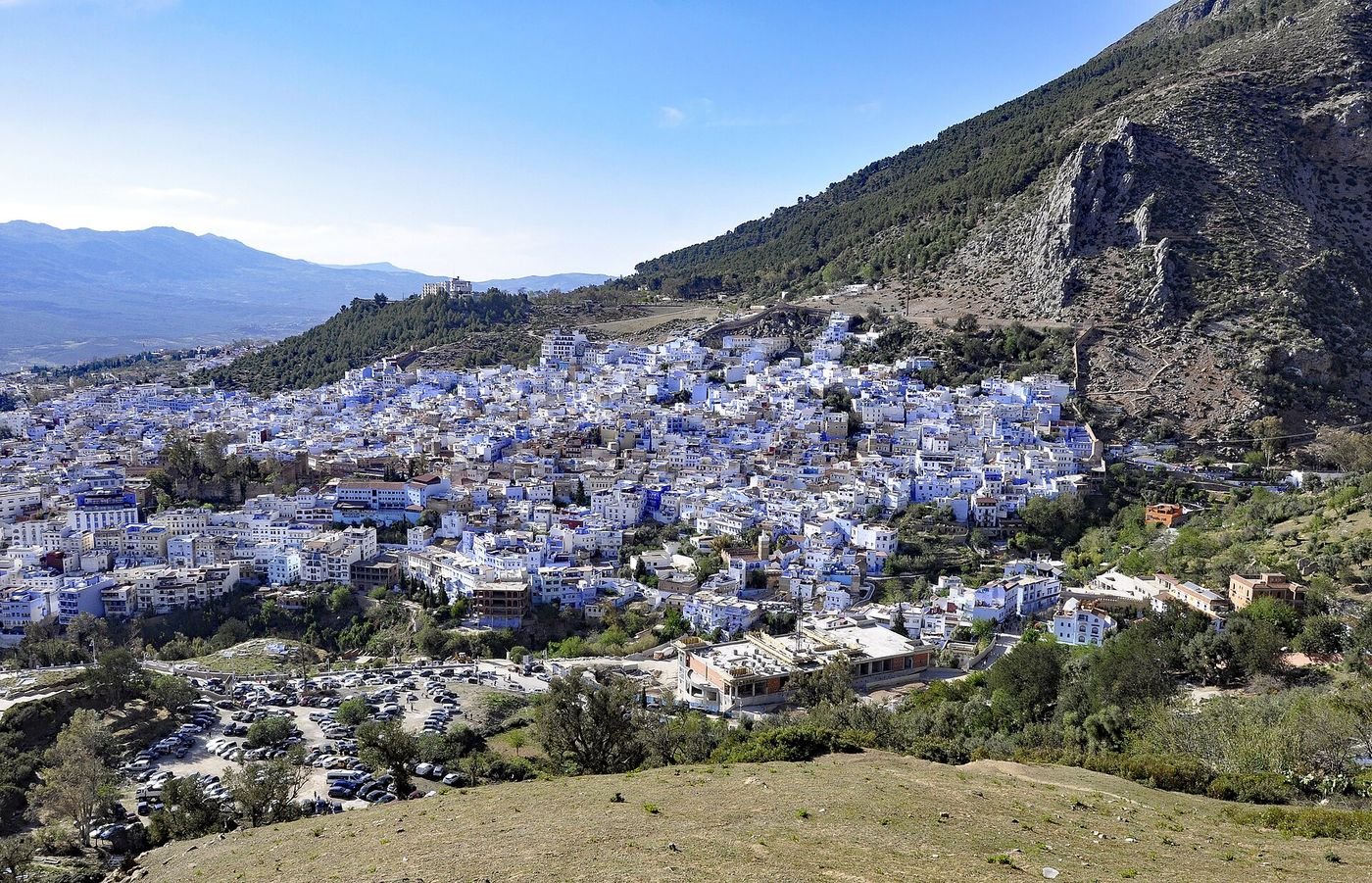
Chefchaouen, widely known simply as the "Blue City," is a small town tucked into Morocco's Rif Mountains that rarely needs more than two or three days to explore — but a little planning ahead makes the trip far smoother. The first question most Gulf travelers have is about visas: citizens of all six GCC countries (Saudi Arabia, the UAE, Kuwait, Qatar, Bahrain, and Oman) can enter Morocco visa-free for stays of up to 90 days for tourism purposes, a policy still in effect as of early 2026. Rules can shift, though, so it's worth double-checking with the nearest Moroccan consulate before booking.
There's no airport in Chefchaouen itself. The closest international gateway is Tangier Ibn Battouta Airport, roughly 120 km away, reachable via a European connection from most Gulf cities. From Tangier, a shared "grand taxi" or a CTM intercity bus covers the mountain road to Chefchaouen in about two-and-a-half to three hours. Travelers building a wider itinerary — say, combining Tangier and Fez — often fly into Casablanca or Fez instead and continue overland from there.
The best months to visit are spring (March–May) and autumn (September–October), when temperatures sit comfortably between 17–26°C and, in spring, wildflowers bloom across the Rif hillsides. Summer (June–August) turns the narrow medina lanes into a heat trap and coincides with peak crowds, while winter (November–February) is notably rainy — Chefchaouen is one of Morocco's wettest towns, with November recording the heaviest rainfall of the year.
Financially, Morocco's currency is the dirham, a "closed" currency that cannot be bought or exchanged outside the country. Withdraw dirhams from an ATM after arrival, or exchange a small amount of euros or dollars at the airport, and keep your receipts if you want to convert leftover cash back before you leave. Restaurants across Chefchaouen are overwhelmingly halal by default, so finding suitable food is never an issue, and prayer times are easy to track through any local mosque or your riad's front desk.
Budget-wise, a frugal traveler can get by on roughly $30–35 a day, covering simple guesthouses, local meals, and public transport. A mid-range trip runs closer to $90 a day, buying a comfortable riad, better restaurants, and a guided day trip to the Akchour waterfalls. Luxury travelers should budget $200+ a day for a high-end riad with a private hammam and a personal driver. Two to three days is enough to see the medina, the kasbah, and the main squares; add an extra day if you want to properly explore the Rif Mountains and Akchour.