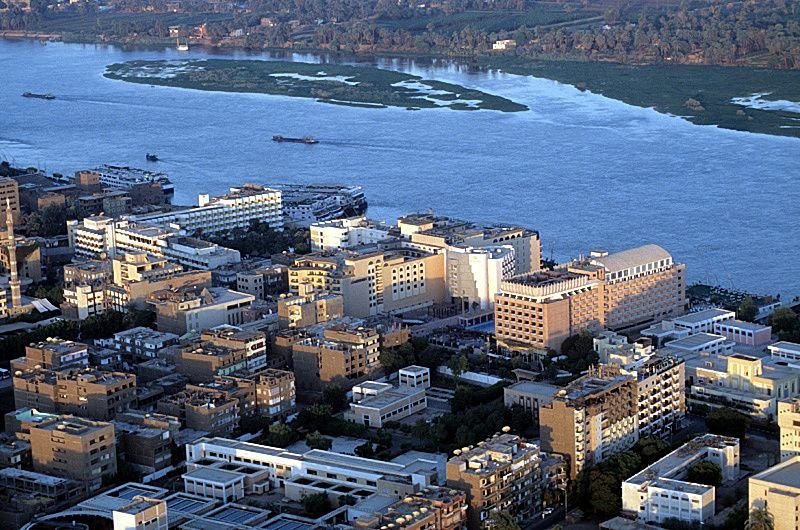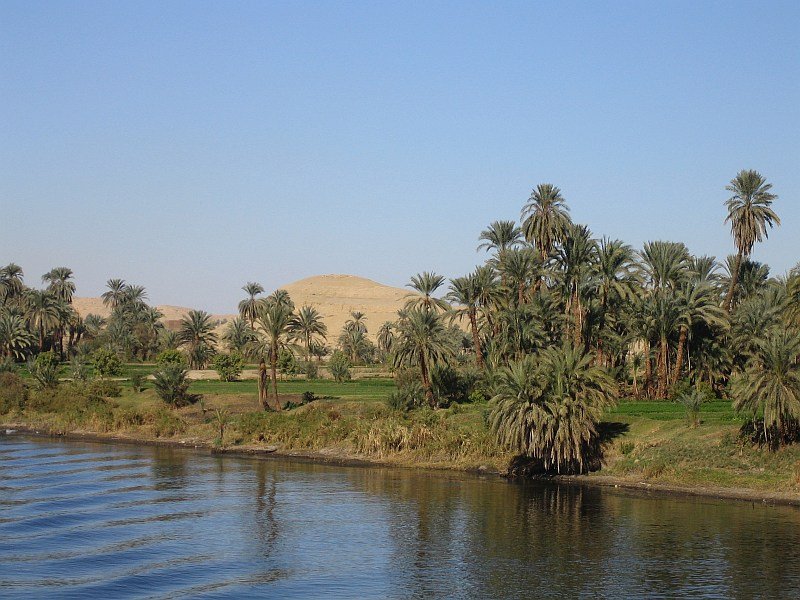
One of the most beautiful ways to explore Upper Egypt is a slow Nile cruise between Luxor and Aswan (or the reverse route), stopping at temples and archaeological sites along both banks while quiet countryside scenery — palm trees, sugarcane fields, small villages, and Nile birdlife — drifts past.
Types of boats: The most common option is the large "Nile Cruise" ship — essentially a floating hotel with air-conditioned cabins, a restaurant, often a small rooftop pool, and an organised sightseeing programme, ideal for travellers who want hotel-level comfort with a changing view every day. The more traditional and intimate choice is the dahabiya, a smaller sailboat carrying a limited number of guests (often under 12-20), moving more slowly and stopping at less crowded sites away from the big tour groups — closer to a relaxed, boutique experience. The felucca, by contrast, is a small motorless sailboat used for short trips (an hour to a day), not typically for overnight stays.
Duration and route: Standard cruises between Luxor and Aswan (or vice versa) run 3 to 5 nights, usually including stops at the Temple of Edfu (Horus), the Temple of Kom Ombo (Sobek and Horus), and Aswan itself or the nearby Temple of Philae. Some longer 7-night itineraries include Luxor's own sites and the Valley of the Kings as part of the programme. Always check whether site entry tickets are included in the cruise price or charged separately.
Best season: As elsewhere in Luxor, October through April is ideal, with December and January especially pleasant for evenings on deck without oppressive heat. Summer is hot enough that some boats reduce sailings or adjust their itineraries.
Price range: Prices vary widely by boat class and booking season — from budget packages on a large cruise ship around $60-100 per person per night including meals, to luxury dahabiyas that can exceed $250-400 per night. Book through a reputable tour operator or well-known booking platform, and read carefully what's included (meals, guide, entry tickets, gratuities).
Practical tips: Pack light, comfortable clothing plus a hat and sunglasses, since most time is spent outdoors on deck or on morning temple visits. Onboard internet is often slow or limited, so treat the cruise as a chance to unplug. Tipping crew and guides at the end of the trip is near-universal practice, so budget for it separately.
Even a three-night Nile cruise offers a completely different angle on Egypt — slower, quieter, and closer to the spirit of the river that built this civilisation.