

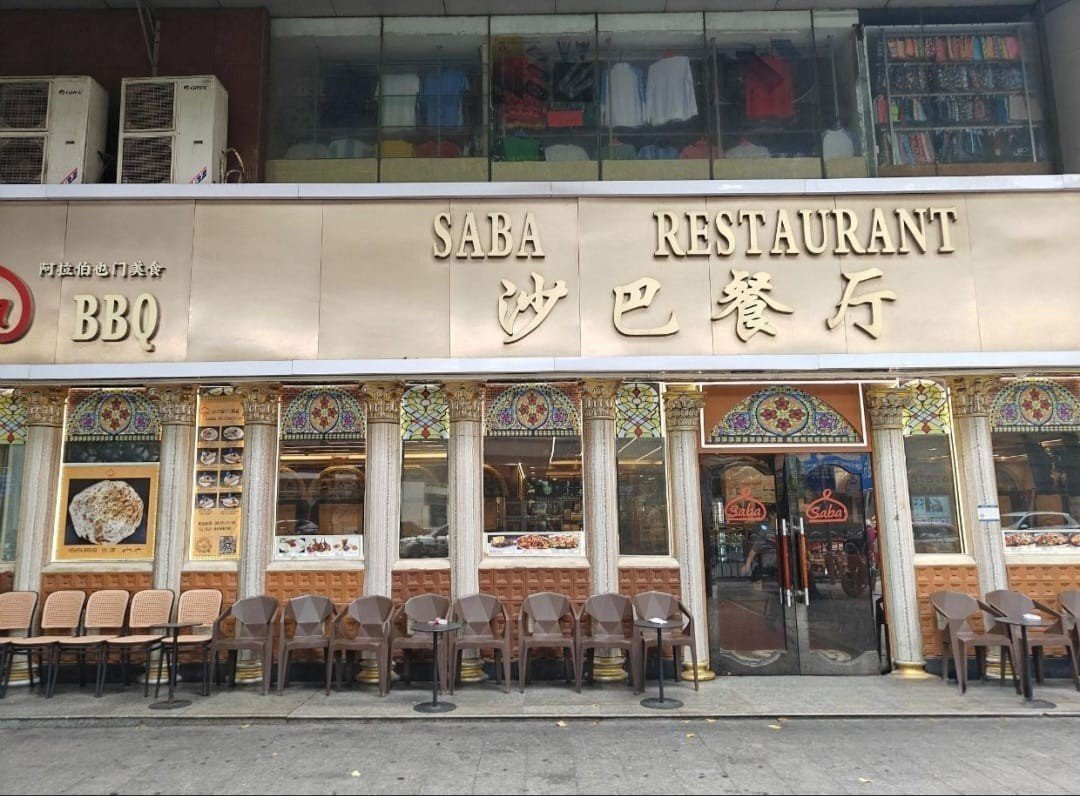
Ask any Arab resident or visitor in Guangzhou about the oldest Yemeni restaurant in the city, and the answer is almost always the same: Saba Restaurant. Opened in the year 2000, it was never just a place to eat — over the years it became a landmark representing the Arab presence in southern China, and one of the very first Yemeni restaurants to open in this part of the world, back when the Arab community in Guangzhou was still in its early stages.
The restaurant is located in Block C of the Tianxiu Building, on Huanshi Middle Road in Yuexiu District — an area known for its dense concentration of Arab and African shops and restaurants, and one of the most frequented districts by Gulf and Arab traders visiting Guangzhou's markets for shopping and import business. Finding the restaurant is rarely a hassle, since any Arab shopkeeper in the area can point you straight to it.
On the culinary side, Saba serves authentic Yemeni and Arab dishes with a homely flavor, most notably various types of mandi — lamb and chicken — along with makfoul and madhbi, plus Yemeni-style grills traditionally cooked over stone or charcoal to preserve their distinctive taste. The menu isn't limited to main courses; it also includes traditional Middle Eastern appetizers and Yemeni and Arab desserts to round off the meal, alongside hot drinks such as Yemeni-style milk tea and coffee that many regular visitors have come to expect.
The restaurant has a simple, family-oriented atmosphere closer to the popular eateries of Yemen and the Gulf than to fine dining, making it a comfortable destination for anyone craving a warm, home-style meal away from the bustle of Chinese cuisine — particularly appealing to families and groups who prefer to sit for longer and share a full mandi tray together, in keeping with the communal spirit the dish is known for.
Saba is especially well suited to traders and travelers spending time in Guangzhou for import and shopping trips, offering them reliably halal food with a familiar flavor that feels like a restaurant back home in Jeddah, Riyadh, or Sana'a — something that matters greatly when spending long days away from home. It's also a good fit for families visiting as tourists who want an authentic Arab meal without venturing into unfamiliar local cuisine.
A few practical tips for Gulf visitors: it's best to arrive slightly early during peak lunch and dinner hours to avoid crowding, since the restaurant welcomes large numbers of Arab customers daily. It's also advisable to reach out in advance or check their social media pages if you plan to book a table for a large group, as mandi is sometimes prepared in quantities that take time. Since the surrounding area is a busy commercial hub, it's worth allotting enough time for the meal without rushing, and taking advantage of the nearby Arab shops to handle other errands during the same trip.
In the broader context, Yuexiu District — particularly the Huanshi Middle Road area and its surroundings — forms the beating heart of the Arab community in Guangzhou, home to dozens of restaurants, cafés, and shops run by Arabs of various nationalities. Given its long history, Saba Restaurant is considered one of the pioneers that helped establish this Arab presence, and remains to this day a starting point many newcomers rely on to get acquainted with the city and its Arab community before exploring the rest of what's on offer.
It's worth noting that the proliferation of Yemeni and Arab restaurants in this part of Guangzhou makes it easy for a first-time visitor to find something matching their budget and mood, yet Saba retains a competitive edge built on more than two decades of accumulated trust with the same community — which explains why many older residents and long-time traders still favor it specifically, despite the many options now available in the area.


💬 Comments
No comments yet — be the first to share your experience!