

Baiyun Mountain, literally "White Cloud Mountain," rises on the northeastern edge of Guangzhou, making it South China's most famous natural landmark and a destination drawing more than 20 million visitors a year. The mountain comprises over thirty adjoining peaks spread across roughly 21 square kilometers, the highest being Moxing Ridge at 382 meters above sea level, locally described as "the first beauty of the City of Rams," a nod to Guangzhou's historic nickname.
The name comes from the sight ancient travelers once described after rainfall or in late spring, when white clouds gather densely around the peaks as if touching the sky — a scene still visible today on humid days. This has earned the mountain the local nickname "the city's lung," thanks to its dense subtropical vegetation that supplies fresh air to crowded Guangzhou below.
The mountain's history predates the founding of Guangzhou itself in 214 BC: Neolithic settlement remains have been found at Huangpodong at its foot. In the late Qin dynasty, the recluse Zheng Anqi withdrew into its caves to gather medicinal herbs, and local legend holds that he attained immortality there, forever linking his name to the mountain. During the Jin dynasty, the Taoist alchemist and philosopher Ge Hong built elixir-refining workshops on the mountain, where he wrote his famous classical Taoist text, the Baopuzi.
With the arrival of the Southern Liang dynasty, the monk Jingtai built the mountain's first Buddhist temple, later giving rise to one of the historic "Eight Sights of the City of Rams" known as "Jingtai's Monk Returns." From the Tang and Song dynasties onward, leading Chinese poets and scholars — including Du Shenyan, Li Qunyu, and the celebrated Su Shi — climbed the mountain and composed verses about it; Su Shi immortalized the "Puxi Lianquan" waterfall scene in lines still quoted in classical Chinese literature today. By the Ming and Qing dynasties, Baiyun Mountain claimed three spots on the official list of the "Eight Sights of the City of Rams," reflecting its deep-rooted place in Guangzhou's cultural memory across the centuries.
Today the mountain holds China's top tourism rating, AAAAA, and tops the list of the "New Eight Sights of Guangzhou." Among its standout attractions is Yuntai Garden, China's largest ornamental flower garden at 120,000 square meters, opened in September 1995 and featuring 14 carefully designed spots showcasing rare blooms across all four seasons. Mingchun Valley, meanwhile, is the country's largest natural bird-watching reserve, surrounded by sights such as the historic Nengren Temple — built on the site of the ancient Yuhong Cave, known for its striking rock formations and clear spring — a Maori sports-culture village, and the famous "First Peak South of Heaven" viewpoint, offering a panoramic view of modern Guangzhou's skyline with Canton Tower visible in the distance.
For an easier ascent, a modern cable car runs from near the main gate directly to the summit plaza, with round-trip tickets costing around 40 yuan — 25 yuan up (including the entrance fee) and 20 yuan down — a practical option for elderly visitors and families wishing to avoid long hiking trails. One curious discovery tied to the mountain: a rare small fish known as the "White Cloud Mountain minnow," found in its streams during the 1930s, later became one of the world's most popular aquarium fish.
The mountain's beauty isn't limited to its named attractions — its old stone paths wind past centuries-old trees and small cascades tumbling between rocks, especially near the "Puxi" waterfall described in Su Shi's famous poem, giving visitors the sense of walking through a living traditional Chinese painting spanning centuries from the age of emperors to today.
For Saudi visitors, it's worth setting aside at least half a day to explore the mountain, starting from the south gate in the morning to avoid crowds, and wearing comfortable shoes for the trails, especially toward Moxing Ridge, which offers the finest view of all Guangzhou. The mountain can easily be paired with a visit to Yuntai Garden on the same day. Since Guangzhou's climate stays humid year-round, it's wise to carry a light umbrella, particularly in spring and summer, and to avoid Chinese public holidays when crowds peak.
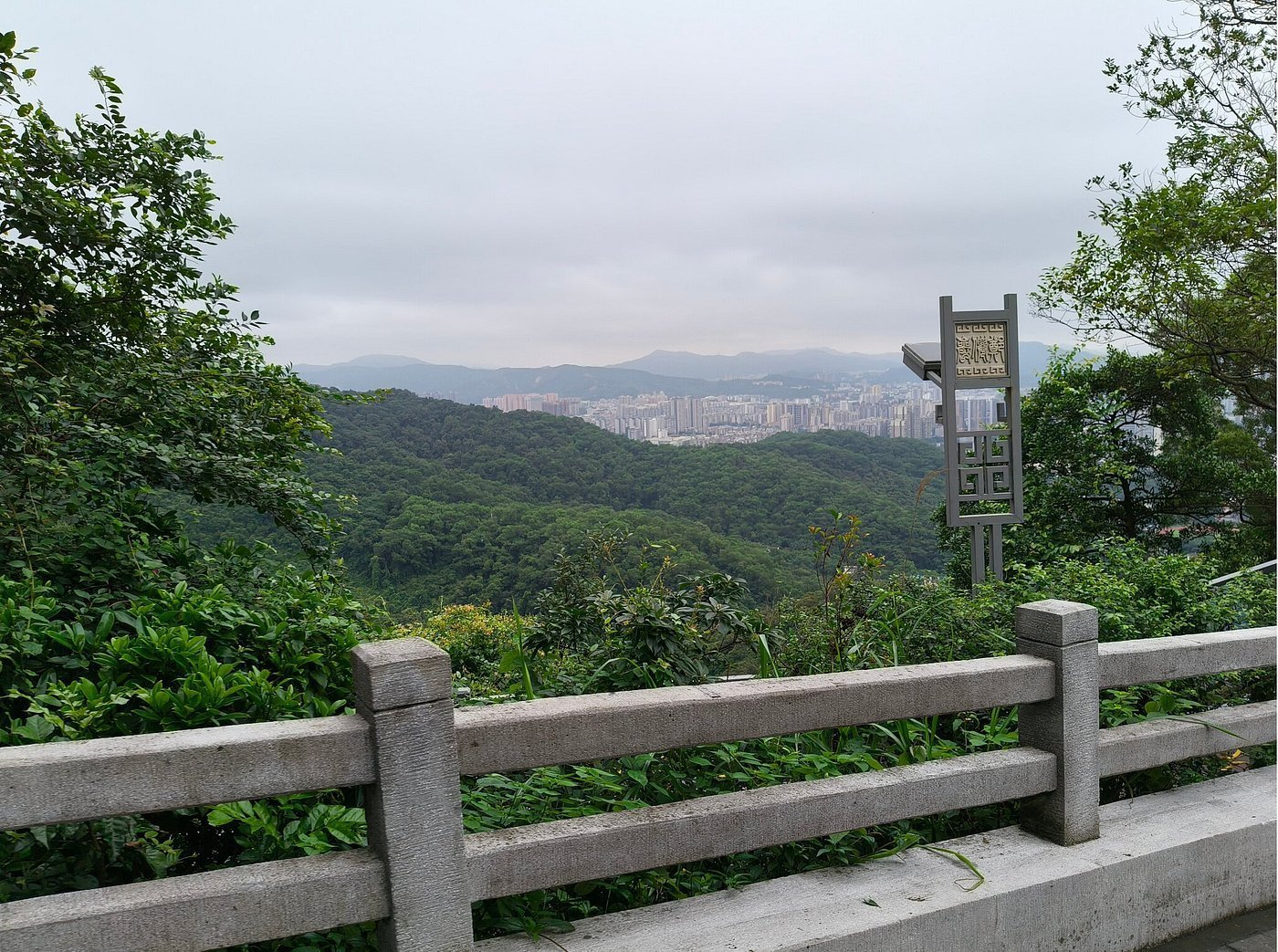
Baiyun Mountain
⭐ —
(0 ratings)
·
Rate this place:
Guangzhou's most famous natural landmark, with over 30 peaks, the renowned Yuntai Garden, and a national bird-watching valley — steeped in millennia of history, immortality legends, and classical Chinese poetry.
📍 No. 801, Guangyuan Middle Road, Baiyun District, Guangzhou
Similar Places

Zhujiang New Town
📍 Huacheng Avenue, Tianhe District, Guangzhou (320 meters walk from Exit C of Liede Subway Station)

Huaisheng Mosque
📍 56 Guangta Road, Yuexiu District, Guangzhou

Huacheng Square (Flower City Square)
📍 Huacheng Square, Tianhe District, Guangzhou (200 meters walk from Exit A of Huangpu Avenue Subway Station)

Abu Waqqas Mosque
📍 210-11 West Huanshi Road, Yuexiu District, Guangzhou
💬 Comments
No comments yet — be the first to share your experience!