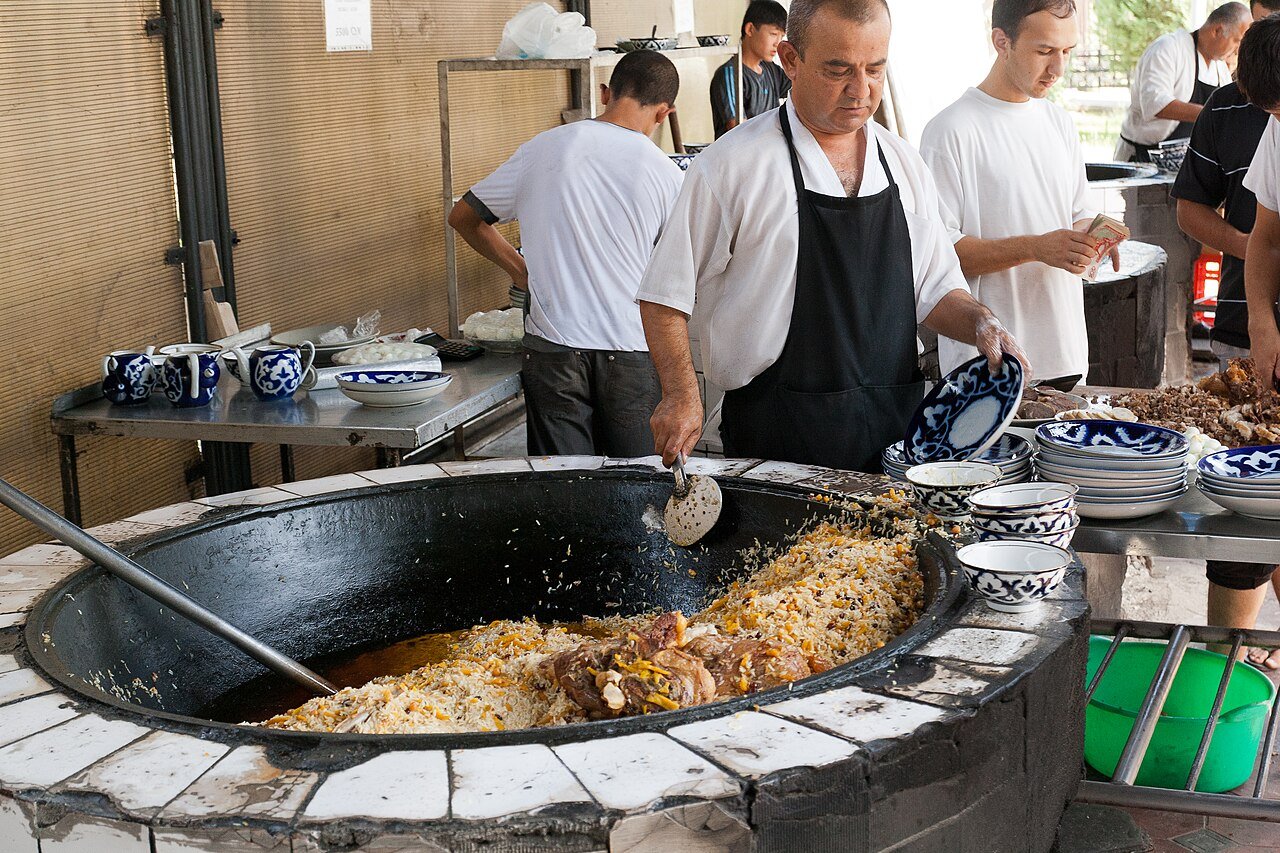
If one dish sums up all of Uzbekistan, it's plov (also called osh or palov), the national dish rarely absent from any occasion, from weddings to an ordinary lunch at a neighborhood teahouse. Its old name, "osh palov," is said to have each letter symbolizing an ingredient in old Persian — water, rice, onion, carrot, meat, oil, and salt — the seven staples of any authentic plov.
But Bukhara's plov has a distinct character setting it apart from other cities' versions. The Bukharan method cooks each ingredient separately first, then layers them together in the pot rather than stirring them, often adding mung beans for a texture and flavor different from neighboring Samarkand's plov, which is steamed and layered with flaxseed oil. For an authentic experience, look for an "osh markazi" (plov center) or local restaurant that prepares plov in a giant cauldron from early morning — once the day's batch runs out, that's it until tomorrow.
Beyond plov, don't skip shashlik (grilled meat skewers, usually lamb or beef), samsa (pastries filled with meat or pumpkin, baked in a tandoor until crisp), and hearty shurpa soup, rich with meat and vegetables — perfect on cold winter days. Uzbek flatbread, known as non or lepyoshka, accompanies nearly every meal, baked fresh in traditional clay tandoor ovens.
The natural place to taste all this is the chaikhana, the traditional teahouse where people sit on carpeted wooden platforms around low tables, sipping green tea continuously between dishes. Don't hesitate to order "kok choy" (green tea) the moment you sit down — it's usually served free or for a nominal fee and considered part of the hospitality before any other order.
Budget-wise, Uzbekistan is kind to travelers. A full meal of plov or shurpa at a local chaikhana typically costs under $5 per person, while a full day of food for a mid-range traveler runs $15-25 if sticking to local spots. Tourist restaurants around Lyab-i Hauz are slightly pricier but still reasonable by European standards.
One last tip: if you see a line of locals outside a small shop with no clear sign, that's usually a good indicator the food is worth the wait.