What sets the Maldives apart from every other tropical destination is that it is a fully Islamic state, officially and constitutionally — over 98% of its population is Sunni Muslim, the constitution requires every Maldivian citizen to be Muslim, and Islamic law has been a foundational pillar of governance since the 2008 constitution. This makes it an unusually comfortable destination for a Gulf traveler in terms of food and general atmosphere, but it also creates a distinctive dual system worth understanding before you travel.
Local food is inherently halal: Traditional Maldivian cuisine is built almost entirely on fish (especially tuna), coconut, and rice, making it halal by its very nature without needing to hunt for special labels. A standout dish is Mas Huni — the beloved breakfast of shredded smoked tuna mixed with grated coconut, onion, lime, and chili, served with roshi, a flatbread similar to chapati. Garudhiya is a clear tuna and lime fish broth, traditionally served often during Ramadan for being light yet protein-rich. And don't miss Hedhika — fried Maldivian snacks like Bajiyaa (triangular pastries), Gulha (fish balls), and Masroshi (tuna-stuffed bread), traditionally served during an afternoon tea break.
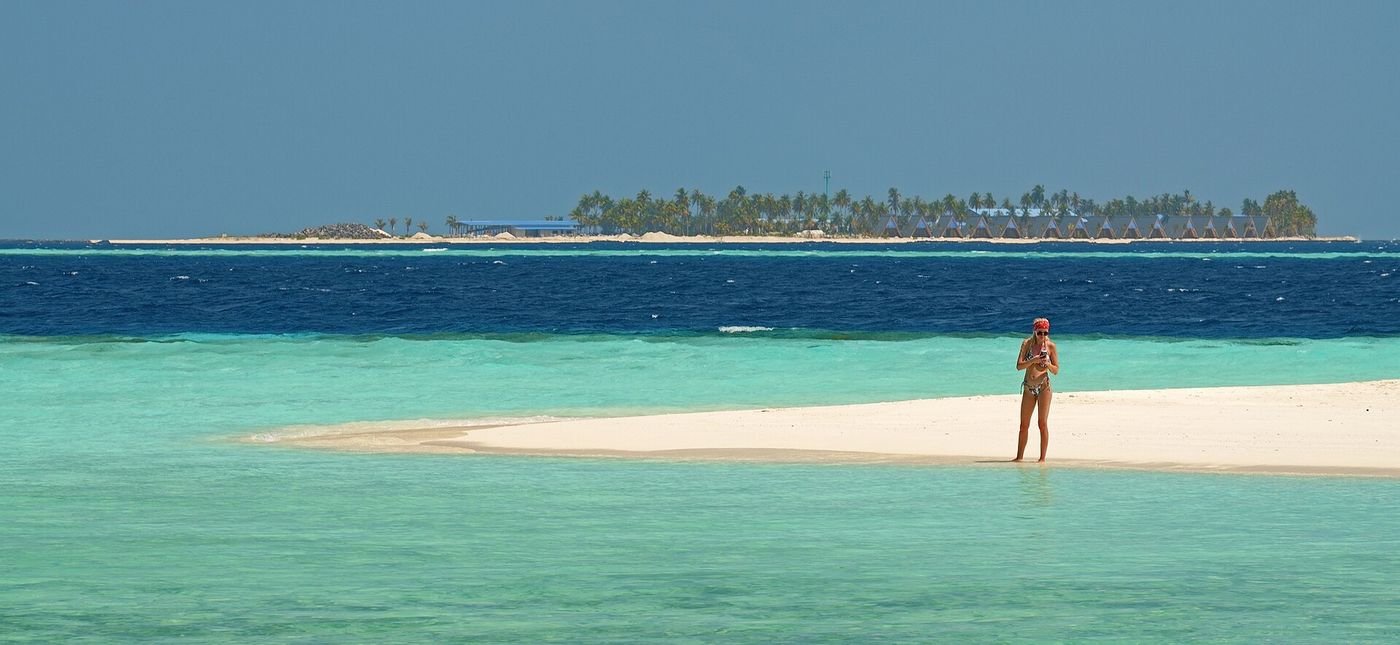
A unique dual system: This is where the fundamental difference between the two types of stays lies. On inhabited local islands (like Maafushi or Thulusdhoo), the sale and consumption of alcohol is entirely prohibited under local law rooted in Islamic principles — you won't find it in any guesthouse or restaurant there — and modest dress (covering shoulders and knees) is expected in public, with a single designated "bikini beach" per island where regular swimwear is permitted. On private resorts — entire islands with no local residents, dedicated exclusively to tourists — alcohol is served under a special license, and there are no swimwear restrictions anywhere on the island. This distinction isn't a contradiction; it's a deliberate system that protects the Islamic identity of local communities while giving tourists full flexibility within resort boundaries.
A practical customs note: Maldivian customs prohibits freely bringing alcohol, pork and its derivatives, and anything considered contrary to Islam (such as religious idols or pornographic material) into the country. If your luggage contains alcohol on arrival, customs will hold it in a sealed bag and return it to you only on departure — this is routine procedure, not something to worry about.
Call to prayer and Ramadan atmosphere: On local islands, you'll hear the call to prayer five times a day just as in any Islamic city, and you'll find a modest, elegant mosque on nearly every island. If you visit during Ramadan, most restaurants on local islands close during the day and open after iftar, while tourist resorts continue serving guests normally throughout the day in consideration of their international clientele.
For a deeper cultural experience: It's worth spending part of your trip on a local island rather than staying solely at a secluded resort — it gives you the chance to taste authentic food at family-run local restaurants for very reasonable prices (a full meal often costs no more than $5–10), and to experience the lifestyle of a conservative Islamic seafaring community still deeply rooted in its traditions despite its openness to global tourism.