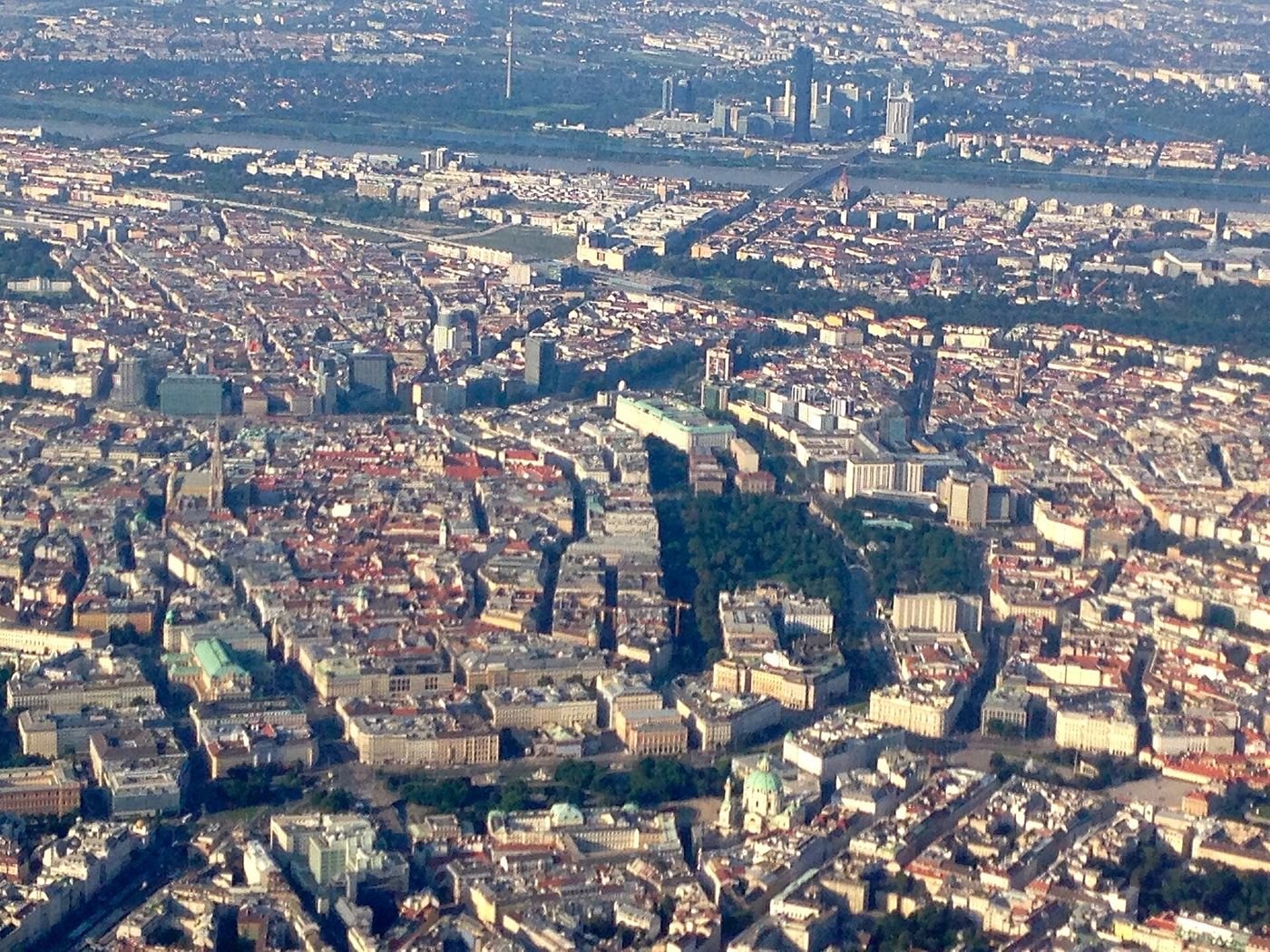
Many Gulf travelers are surprised by the scale of Vienna's Muslim presence. Muslims make up around 13% of the city's population (over 216,000 people) — one of the highest shares among Western European capitals — which makes finding halal food and a place to pray far easier than many expect before arriving.
Where to find halal food. Favoriten, Vienna's 10th district, is the city's unofficial hub of halal cuisine, dense with Turkish and Arab shops and halal grocery stores. But halal restaurants are also scattered through the city center and near major sights. Names visitors regularly mention include Apadana (Iranian cuisine), Türkis Palast, Diwan Abanoz, Halal Pizza & Kebab, Mediterrass, Albadawi (Arabic cuisine), Monsoon (halal Asian cuisine), Xtanbul, Al Zaytouna (Lebanese/Arabic cuisine), and Le Couscous (Maghrebi cuisine). It's always worth confirming halal certification or asking staff directly — some "Middle Eastern"-branded restaurants in tourist areas may not be fully halal despite the name.
Mosques and prayer spaces. Vienna has roughly 50 mosques and prayer rooms spread across its districts, reflecting the diversity of its Muslim communities from Turkey, the Balkans, the Arab world, and South Asia. The most significant is the Vienna Islamic Centre (Islamisches Zentrum Wien), located in the Floridsdorf district (21st district) at Am Bruckhaufen 3A — the largest mosque in Austria, with a 32-meter minaret and a 20-meter-diameter dome. Opened in 1979, and notably for a Saudi visitor: King Faisal bin Abdulaziz Al Saud pledged funding for its construction in 1975, making the mosque a symbol of the historic relationship between Saudi Arabia and Vienna's Muslim community. Other well-known mosques include Kuba Mosque, Hidaya Mosque, and Schura Mosque.
Muslim life in the city. Vienna's mayor has hosted an annual iftar with the Muslim community for years, reflecting the community's integration into the city's public life. Halal butchers and Turkish/Arab grocery stores are concentrated in Favoriten and parts of the 15th district (Rudolfsheim-Fünfhaus). Don't expect a formally designated "halal zone" or standardized certification signage like in some Asian cities, but the density of restaurants and shops makes the experience practically easy once you reach these neighborhoods.
Practical tips for the Muslim traveler. Major hotels in the city center typically know prayer times and can point you toward the qibla direction on request, and some provide a prayer mat in the room. Common prayer-time apps work accurately in Vienna. If you're planning to attend Friday prayers, the Islamic Centre in Floridsdorf is the most comprehensive and accommodating option, though it's a bit outside the city center — plan your transport in advance. No need to worry about modest dress; Vienna is culturally tolerant, and a visibly hijabi traveler won't feel any notable discomfort in public spaces.
In short: Vienna isn't only a city of palaces and classical music — it's also a city with a genuine, decades-established Islamic fabric, making it a comfortable destination for a Muslim family wanting to explore imperial Europe without compromising their religious lifestyle.