

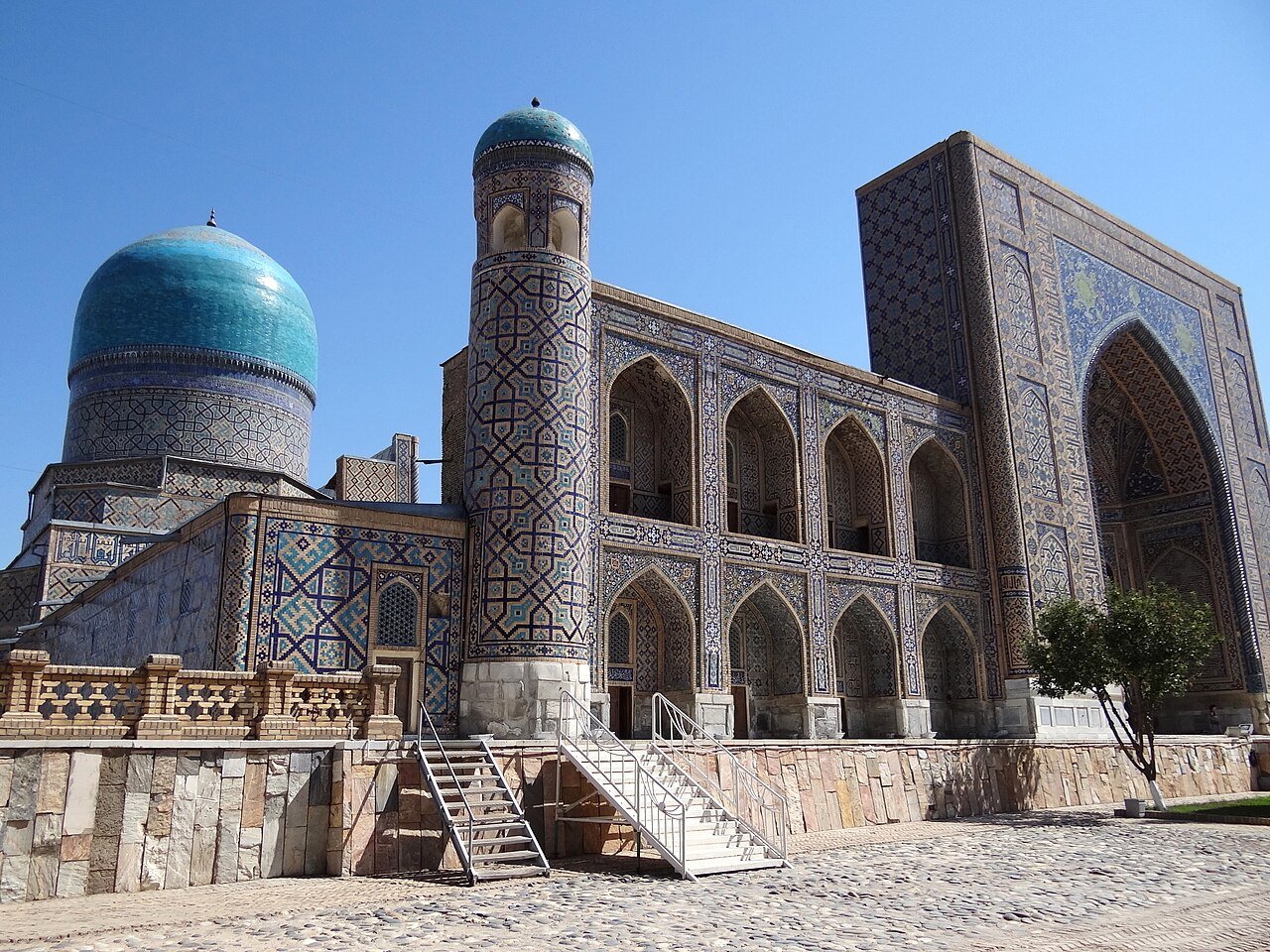
There are many cities along the historic Silk Road, but few deserve the title "legendary" quite like Samarkand. Here are ten reasons this city should top your list.
First, UNESCO listed it in 2001 under a striking name: "Samarkand — Crossroads of Cultures," recognizing its unique historical role as a meeting point of Chinese, Indian, Persian, and Turkic civilizations over thousands of years.
Second, Registan Square, with its three exquisitely decorated madrasahs, ranks among the most photographed squares in the entire Islamic world, and the sight of its turquoise domes at sunset is unlike anywhere else.
Third, the city was capital of Tamerlane's empire, stretching from India to Anatolia, meaning nearly every landmark here carries the ambition of an emperor determined to build the greatest city of his age.
Fourth, its roots trace back to the ancient city of Marakanda, inhabited by the Sogdians, the true masters of the silk trade, roughly 2,500 years ago, making Samarkand one of the world's oldest continuously inhabited cities.
Fifth, the Ulugh Beg astronomical observatory, built by a Samarkand ruler in the 15th century, produced the most precise star catalog the world had seen since Ptolemy's era, proof this city was a center of science, not just power.
Sixth, the Shah-i-Zinda necropolis, with its narrow passage flanked by more than twenty tombs decorated in blue tilework, offers a contemplative spiritual experience rarely found at any other tourist site.
Seventh, Samarkand-style plov, cooked differently from its Bukharan counterpart, gives you an additional reason to taste the culinary diversity within a single country.
Eighth, Samarkand non bread, with its legendary reputation for staying fresh longer, is a unique edible souvenir you won't find anywhere else in the world.
Ninth, Samarkand today is in the middle of a genuine tourism renaissance with expanding visa-free access for many nationalities, making it easier to reach than ever before.
Tenth and finally, because few places in the world let you literally walk through layers of history spanning from the ancient Sogdian era to the 21st century, all within the same half-circle of the city.
💬 Comments
No comments yet — be the first to share your experience!