
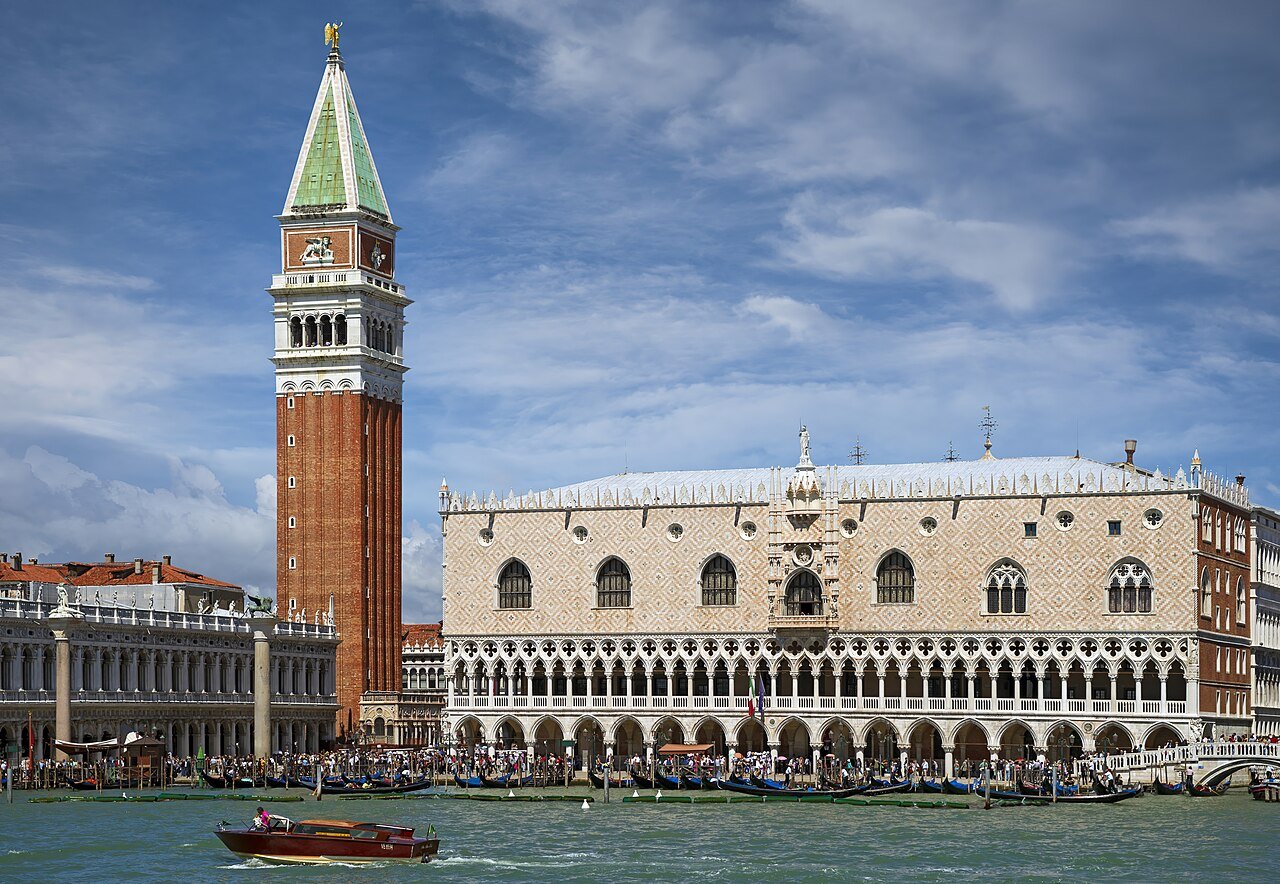
When you stand before the Doge's Palace in St Mark's Square, you're standing before the seat of government of one of the longest-lasting republics in European history. The Republic of Venice ruled from roughly this building, through its successive rebuilds, from the medieval period until its fall to Napoleon Bonaparte in 1797 — over a thousand years of relative continuity.
Architecture that blends strength and ornamentation
The palace's style is known as "Venetian Gothic," a unique blend of European Gothic form with Byzantine and Islamic decorative influences carried in through trade routes with the East. The water-facing facade appears from below to float on slender marble columns, while the visually heavier upper section crowns the building — a deliberate architectural reflection of the city's wealth and naval power at its height.
Who actually ruled here?
The "doge" wasn't an absolute monarch but a lifetime-elected head of state chosen by the nobility, his power deliberately limited by several councils to prevent power concentrating in one person's hands — a relatively advanced political system for its era. The palace wasn't just a residence; it simultaneously housed the senate, the courts of justice, and the prisons, which explains the building's complex layout of corridors and chambers.
The Bridge of Sighs: a name hiding a harsher story than it sounds
The small, enclosed white bridge connecting the palace to the adjacent prison (the "Pozzi/Piombi") was built in the early 17th century and named the "Bridge of Sighs" because it was the last glimpse condemned prisoners had of Venice's light and beauty through its two small barred windows before entering damp, dark cells. The later romantic gloss on the name — a tale of lovers sighing as they crossed — was added by 19th-century poetry and literature, not historical fact.
How to visit today
The Doge's Palace ticket (around €30) includes entry to the St Mark's Museum and an actual crossing of the Bridge of Sighs as part of the visitor route, along with halls like the Chamber of the Great Council, home to one of the largest oil paintings in the world. The palace is typically open from 9am until late in peak season (until 11pm on Fridays and Saturdays roughly between May and September), and booking online in advance is strongly advised to avoid queues that can stretch a full hour in summer.
The Doge's Palace isn't just another photo stop on your trip; it's the best single point for understanding how a city built on wooden piles in a lagoon became one of the most powerful maritime and trading forces in European history.
💬 Comments
No comments yet — be the first to share your experience!