

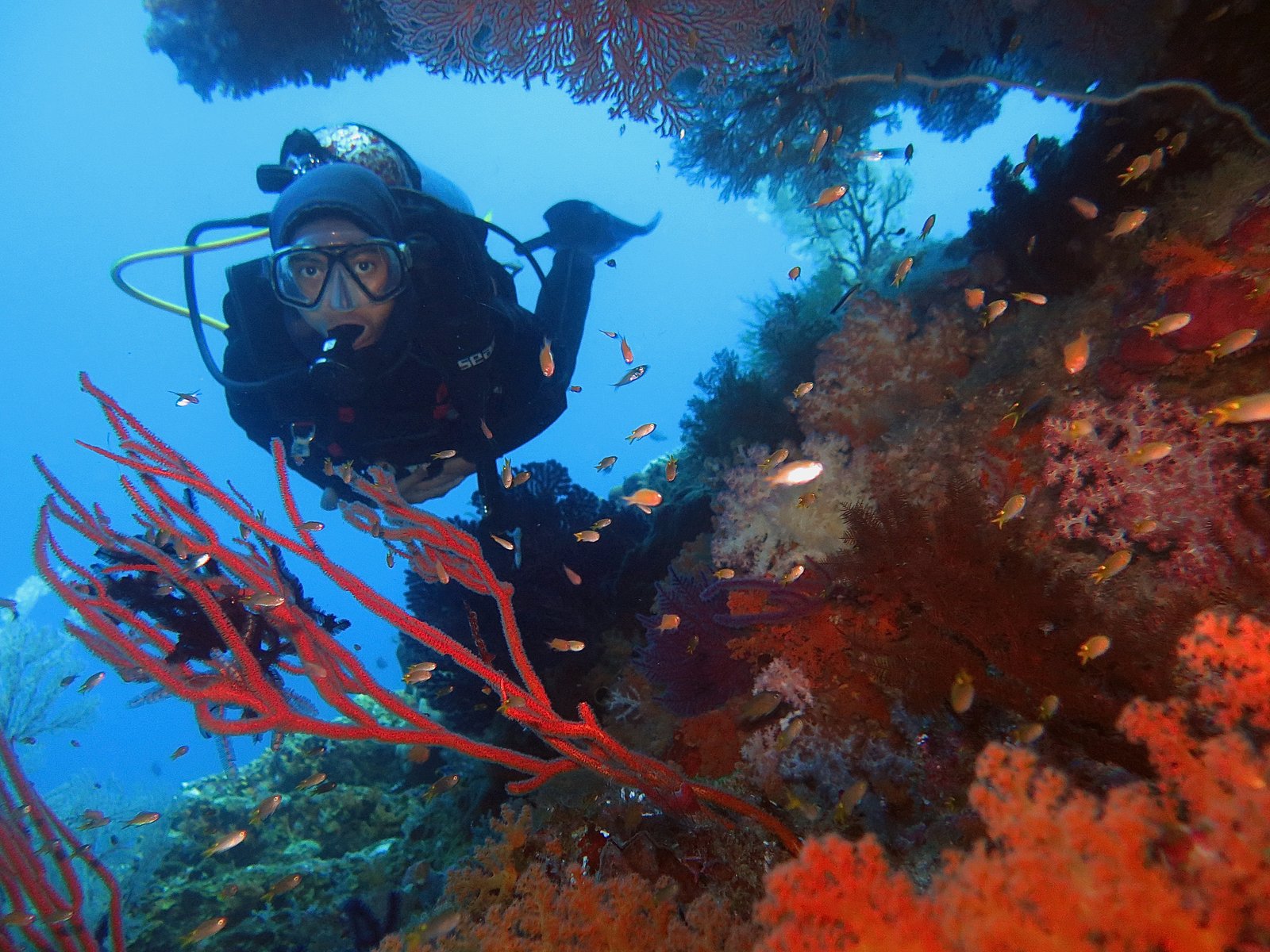
Coral reefs are among the richest ecosystems on Earth, and they've become bucket-list destinations in their own right, drawing millions of divers every year. Here are the destinations that consistently rank among the best for both experienced divers and newcomers.
1. Raja Ampat, Indonesia
Known as the "crown jewel of the Coral Triangle," the Raja Ampat archipelago in West Papua is home to an estimated 75% of the world's known coral species and more than 1,400 species of reef fish. Standout sites include Cape Kri, famous for extraordinary fish density, Blue Magic, where hammerhead sharks and manta rays gather, and the coral gardens around Misool island. The waters are relatively remote, but the ecological health here ranks among the best on the planet thanks to early and effective marine protection.
2. The Red Sea — Farasan Islands, Saudi Arabia
Gulf divers don't need to travel far. The Farasan Islands archipelago off the coast of Jazan comprises more than 80 coral-fringed islands, and surveys by the Living Oceans Foundation recorded the highest live coral cover found anywhere in the Saudi Red Sea survey at the Farasan Banks — nearly 30%. Top dive sites include Abu Galawa Soraya, known for its varied coral gardens, and the Shark Observatory, where reef shark sightings are common. The best diving season runs from October to May, when water temperatures sit between 25°C and 29°C and visibility regularly exceeds 20 meters, with frequent sightings of sea turtles, spinner dolphins, and eagle rays.
3. The Red Sea — Egypt and Jordan
The Red Sea stretches along the coasts of Egypt, Saudi Arabia, and Jordan and is a year-round diving destination thanks to its warm, clear waters. The Egyptian side is famous for its near-vertical coral walls and historic wrecks like the SS Thistlegorm, along with the Ras Mohammed reserve near Sharm El Sheikh, one of the region's richest sites for marine life.
4. The Great Barrier Reef, Australia
The world's largest coral reef system stretches over 2,300 kilometers along Australia's northeast coast and is home to more than 1,500 species of fish, 400 species of coral, and 30 species of marine mammals. Despite repeated bleaching events driven by rising water temperatures, large sections remain vibrant, especially in the remote north. Top sites include the Ribbon Reefs, Osprey Reef, and Cod Hole, famous for its giant potato cod.
5. Palau, Micronesia
Nicknamed the "Seventh Underwater Wonder of the World," Palau sits at the crossroads of three of the planet's major ocean currents, giving it a home to 7 of the world's 9 known giant clam species, roughly 1,400 reef fish species, 300 soft coral species, and 400 hard coral species. Its most famous site, Blue Corner, is known for strong currents and reliable, dense shark action — a minimum of 50 previous dives is generally recommended before attempting it, and a reef hook is essential to stay stationary in the current. German Channel is celebrated for its manta ray cleaning stations.
6. The Maldives
A chain of coral atolls in the middle of the Indian Ocean, the Maldives offers relatively calm diving alongside luxury resort stays, with seasonal sightings of whale sharks and manta rays, making it an ideal pick for divers who also want to relax.
One final tip: always check the certification level required for each site. Some, like Blue Corner in Palau, demand advanced experience due to strong currents, while others, like Farasan and the Maldives, welcome beginners too.
💬 Comments
No comments yet — be the first to share your experience!